
The Caregiver’s Cheat Sheet to:
Your Aging Parent is Moving In
(And now you’re negotiating custody of a 1994 floral recliner)
The Caregiver’s Cheat Sheet to:
As funny as that sounds, it usually isn’t about the recliner. It’s about trying to hold onto pieces of a life that’s changing very quickly. For everyone.
Your parent isn’t just bringing stuff. They’re bringing pieces of the life they may be scared of losing. And not all clutter is created equal.
Here’s a practical guide to sorting it all into four categories: the emotional support furniture, the “but I might need it someday” boxes, and everything in between.
So before you say, “Absolutely not, that cannot enter my house,” ask yourself: What category does this item fall into?
1. Actual Necessities
These stay. Beyond the obvious (clothing, medications, glasses, etc.), these are the things that your parent relies on every day to feel comfortable, stable, and settled. They aren’t just meaningful—they’re part of daily life.
Think:
The blanket they use every night
The lamp they always read by
The favorite chair they sit in every morning
Items tied to routine
Find room for these wherever you can—even if your interior designer friend would like a word.
2. Emotional Support Objects
This is where the hardest decisions usually happen. These things may not be essential for day-to-day life, but they represent identity, memories, and a life built over decades.
Think:
Furniture they haven’t used in years but still love
Ceramic rooster collections
“Important papers” boxes full of coupons—most probably expired
Holiday decorations from 1978
So when we say, “You don’t need this anymore,” what they sometimes hear is, “You don’t need your old life anymore.”
What to do:
Let them choose a few meaningful items to display
Store or rotate decorations and keepsakes instead of fighting over them
When something truly won’t fit, blame the space—not their taste.
3. Important—But They Don’t Need to Live Here
Some things matter—especially to the rest of the family. They just don’t need to live in your house.
Think:
The good china
Family heirlooms
Photo albums and home movies
Your childhood trophies and report cards
What to do:
Pass meaningful items to relatives.
Sell or donate items no one wants.
Digitize photos and home movies.
Store a limited number of labeled boxes.
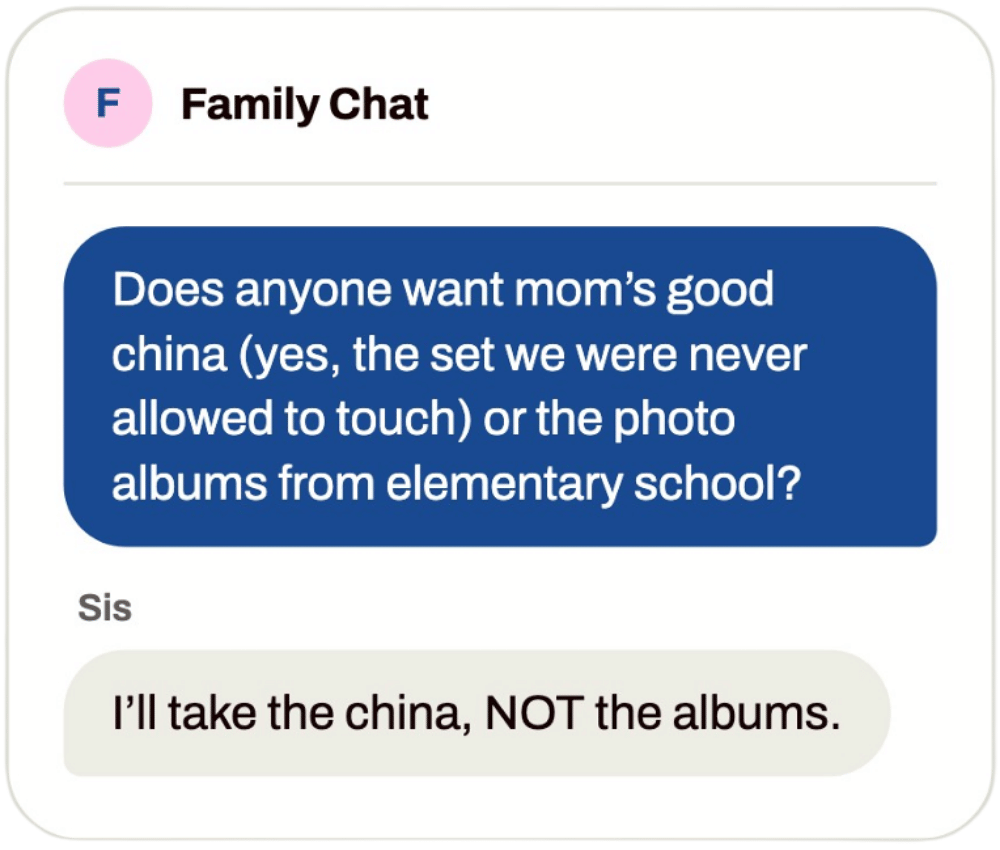
Be specific about the plan. “We’ll store it somewhere” is how garages become archaeological sites.
4. Not Ready to Decide
Some decisions are simply too emotional to make during a major life transition.
That’s okay.
Create one clearly defined “Not Yet” space—maybe two boxes, one storage bin, or one shelf in the garage. Then agree on a date to revisit it in a couple of months.
Giving yourselves permission to wait is sometimes the best decision you can make.
Before You Touch a Single Box
Before moving day, talk about more than just belongings.
Is this move temporary or permanent?
What space will be theirs?
How will siblings and relatives be involved?
How will groceries, utilities, transportation, or home updates be handled?
Give Them Real Control
How their private space looks
Which sentimental items are displayed
Where their belongings are kept
What still feels important to have close by
One Last Thing
The boxes will eventually get unpacked. The adjustment might take a little longer—for everyone.
Give yourselves some grace. Home isn’t built in a day. You’ll get there…even if your aesthetic dies a little in the process.
Find this cheat sheet helpful and want to save it?