
The Caregiver’s Cheat Sheet to:
The Must-Have Paperwork When You’re Caring for Someone
(“It must be somewhere in this drawer” is never helpful.)
The Caregiver’s Cheat Sheet to:
When you’re caring for someone, certain paperwork comes with the territory—medical, financial, insurance, legal, all of it. Here’s your checklist so nothing important falls through the cracks.
First: Make Sure These Exist
Some of the most important paperwork isn’t something you can just go find in a drawer. These documents may need to be created, signed, witnessed, notarized, or completed with an attorney.
Healthcare power of attorney / healthcare proxy
Names the person who can make healthcare decisions if they can’t themselves.
HIPAA authorization
Allows designated people to receive and discuss their health information with healthcare providers.
Financial power of attorney
Gives someone legal authority to handle financial matters on their behalf.
Trust documents
If they have or need a trust as part of their estate plan.
Advance directive / living will
Puts their wishes for medical care in writing.
Will
Spells out what should happen to their property and belongings after they die.
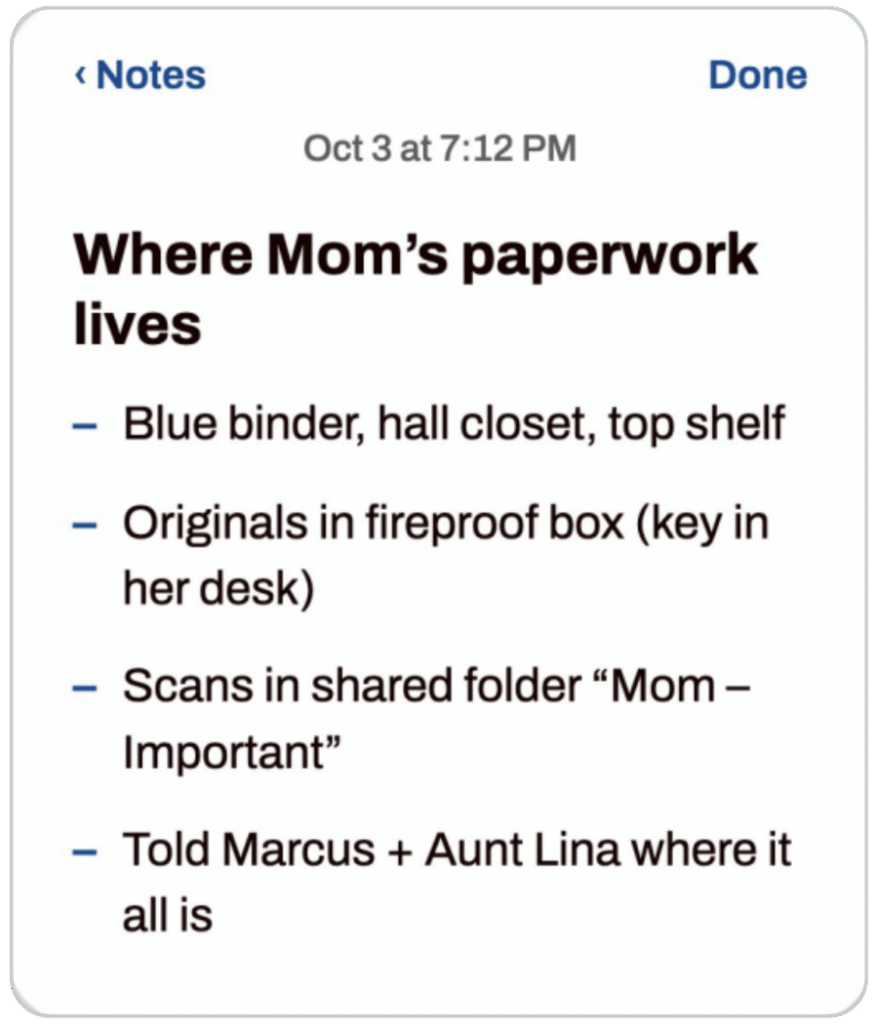
One important note: Having these documents isn’t enough if nobody knows where they are. Make sure the right people know what exists and how to access it.
Next: Get Your Hands on These
You may not need a folder full of originals. But you should know what exists, where it is, and how to access the information when you need it.
Health insurance cards
Copies of Medicare, Medicaid, private insurance, prescription drug and/or supplemental insurance cards.
Bank + financial account information
Know where they bank and what checking, savings, investment and retirement accounts they have.
Doctors + other healthcare providers
Names and contact information for the people involved in their care.
Current medication list
Medication names, doses, prescribing doctors and pharmacy.
Income + benefits information
Social Security, pensions, retirement distributions, disability, veterans benefits and other regular income.
Regular bills + debts
Mortgage or rent, utilities, credit cards, loans, insurance, subscriptions—and what’s on autopay.
Insurance policies
Life, home, auto, long-term care and other active policies.
Funeral or burial plans
Anything already arranged, prepaid or put in writing.
Property information
Deeds, mortgage information and records for other property they own.
Recent tax returns
Important personal records
Birth certificate, Social Security card, marriage/divorce records, citizenship/immigration documents and military records.
Put It All in One Place
(Yes, this part is annoying. It’s also weirdly satisfying when it’s done.)
Give all this paperwork a home—a dedicated binder, folder, or secure digital folder. It may take a little time to pull together, but sometimes that “well, look at me” feeling is underrated.
Don’t Forget the Digital Stuff
A lot of the information you may need now lives online—patient portals, bank accounts, insurance, benefits and more. When possible, make sure you have your own authorized access rather than using someone else’s login. Depending on the account, that might mean being added as a proxy or authorized user, or having the right legal authority in place.
(Because “I have their password” doesn’t mean you have permission.)
Find this cheat sheet helpful and want to save it?