
The Caregiver’s Cheat Sheet to:
Finding Local Help for an Aging Parent
(Your shortcut to “There has to be someone who does this, right?”)
The Caregiver’s Cheat Sheet to:
Somewhere between “Mom probably shouldn’t be driving anymore” and “Who’s making sure Dad eats lunch?” it hits you: you need help. Real, local, someone-in-their-town help. If you’re not sure where to start, this one’s for you.
Good news: nearly every community in the U.S. has an office whose whole job is connecting older adults and their families to local support. It’s called your Area Agency on Aging, or AAA.
(And no, not the tow truck people. Confusing, we know.)
Your local AAA is basically the front desk for aging-related care and caregiver support in your community.
They can help you:
Figure out what support exists nearby
Understand what your loved one might qualify for
Connect with real local services like meals, transportation, respite care, benefits help, and caregiver support
Sounds Promising. But What Can They Actually Help With?
Every area is different, but AAAs may connect you to help with:*
In-home care options
Meal delivery programs
Transportation to appointments
Respite care
Adult day programs
Caregiver support groups
Caregiver training
Benefits counseling
Medicare or Medicaid guidance
Local nonprofit or county programs
Home safety updates, like grab bars or ramps
*Not everything will be free. But a lot of it is subsidized or lower cost.
I’m Sold. Now How Do I Get the Help?
1. Find Your Local AAA
You could Google “AAA near me,” but you’ll mostly get tow trucks and travel deals. Instead, use the Eldercare Locator: a free, national directory of aging and caregiving services. Type in a ZIP code and it tells you which AAA serves that area and how to reach them. Then you call that AAA directly. (More on that in Step 3.)
Search by your loved one’s ZIP code, not yours (unless you live in the same area). Services are usually based on where the person receiving care lives. (Probably not news to you. We’re flagging it because when you’re moving a million miles a minute, your fingers can type your own ZIP on autopilot.)
2. Before You Call, Have This Ready
Details about your loved one:
Name
Age
ZIP code
Living situation: alone, with you, with someone else, facility, etc.
Main health concerns or diagnosis, if you know them
Insurance: Medicare, Medicaid, VA benefits, long-term care insurance, private insurance
What they need help with:
Meals
Bathing, dressing, or personal care
Transportation
Supervision or safety
Housework
Social connection
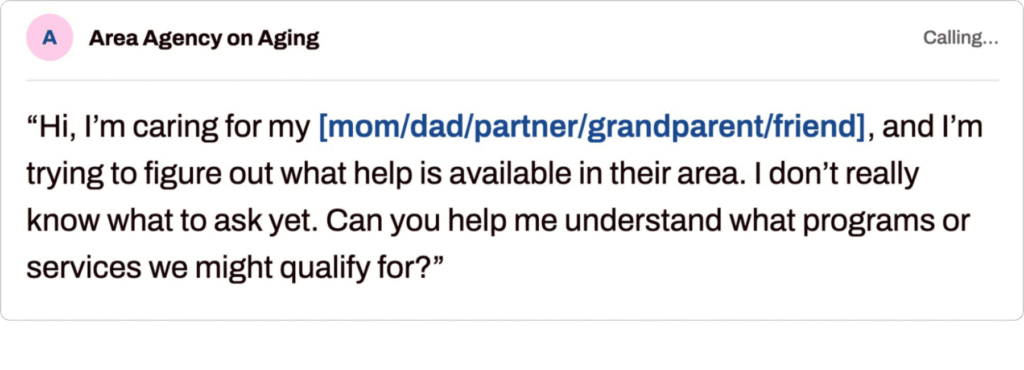
3. Call Your AAA With This Script
4. Ask These Questions
Can you screen us for programs we might qualify for?
Are there respite care options in our area?
Are there waitlists we should get on now?
Are there meal delivery programs available?
Can someone help us understand Medicare, Medicaid, VA benefits, or other financial support?
Is there help for home safety changes, like grab bars, ramps, or fall prevention?
Are there caregiver support groups or training programs?
Can you send me the next steps by email or mail?
Are there adult day programs nearby?
Who helps with transportation to
appointments?
5. Take Notes During the Call
Write down:
Name of the person you spoke with
Their direct number or extension
Any programs they mentioned
Eligibility rules
Costs, if any
Waitlists
Documents you need
Who to call next
What step you should take first
6. After the Call, Do This Annoying (But Important) Part
Before you hang up, ask: “Can I follow up with you directly if I get stuck?”
Within 24 hours:
Save the contact name and number
Add deadlines or follow-up dates to your calendar
Start any applications they recommended
Get on waitlists, even if you’re not sure yet
Share the info with siblings, partners, or anyone else who keeps saying “let me know how I can help”
Try this text:
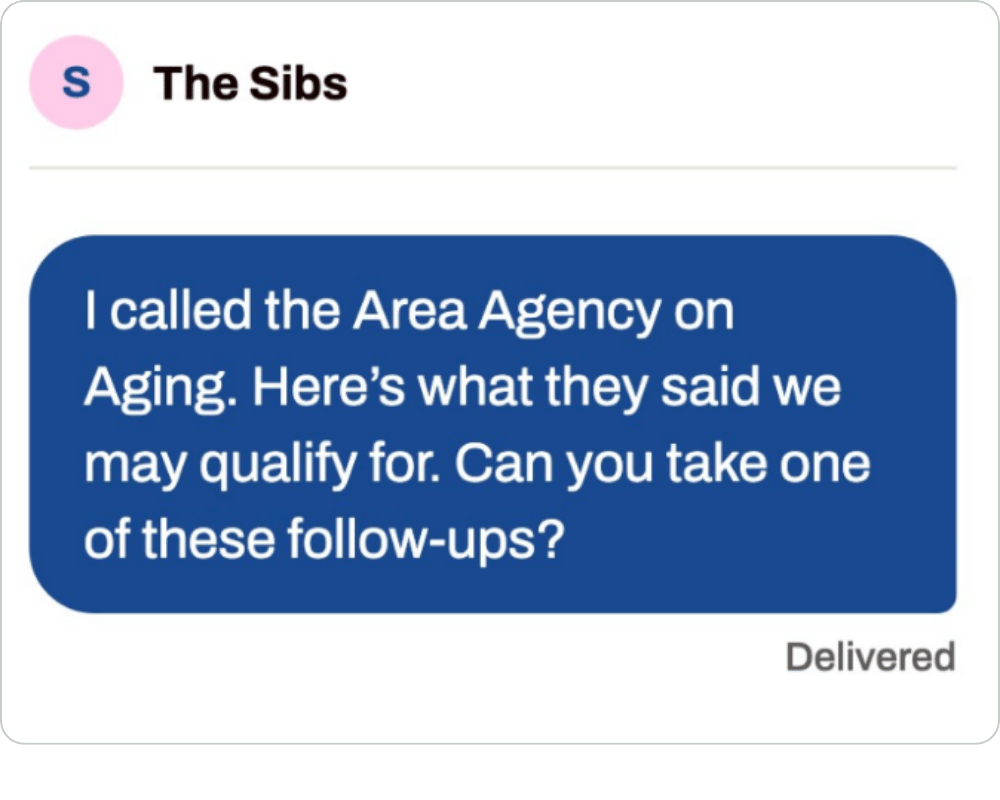
Because congratulations. You now have homework to delegate.
A Note to Caregivers
We’re not going to lie. This may feel a little government-y at first.
You might get transferred. You might need to leave a voicemail. You might hear the word “eligibility” enough times to develop a twitch.
Stay with it. The good stuff is often behind the least sexy phone menu.
Also: the AAA may not provide every service directly. Sometimes their job is to point you to the right local program, nonprofit, benefits counselor, transportation service, or waitlist.
That still counts as help.
Find this cheat sheet helpful and want to save it?