
The Caregiver’s Cheat Sheet to:
Could This Be Dementia?
(When you can’t shake the feeling something’s off)
The Caregiver’s Cheat Sheet to:
At first, you tell yourself it’s probably nothing. Everyone forgets things. Everyone changes a little with age.
But when “nothing” starts happening more often and your gut won’t quiet down, that’s when many people start wondering: Could this be dementia?
This cheat sheet can’t answer that question. That’s for your loved one’s doctor to figure out. But it can help you make sense of what you’re seeing, prepare for a doctor’s appointment, and know what to do next.
1. Look for Changes From Their Normal
You’re not looking for one bad day. You’re looking for a pattern that feels different from who they’ve always been. You might notice things like:
Repeating the same stories or questions
Falling for scams or making unusual decisions
Getting confused about dates, places, or familiar routines
Trouble managing bills, medications, or everyday tasks
Personality changes that feel out of character
Getting lost or having repeated falls
It’s: “Is this different from who they’ve always been?”
2. Write Down Facts, Not a Diagnosis
You don’t need to prove your loved one has dementia. You’re building a timeline, not a court case.
Specific examples give a doctor something they can actually work with.
Patterns matter more than one bad day.
3. Help the Doctor See the Full Picture
Not every change in memory or behavior means dementia. There can be other explanations, which is one more reason to get it checked out rather than try to figure out what’s causing it yourself.
“She’s getting forgetful” doesn’t give the doctor much to work with. Specific examples do.
If you’re worried your loved one will walk into the appointment saying, “Everything’s fine!” while giving an Oscar-worthy performance, send the doctor a note beforehand.
Thanks to privacy laws (hello, HIPAA), the doctor usually can’t share your loved one’s medical information with you without their permission. But they can absolutely hear from you.
< Notes
Done
Sept 12 at 8:47 PM
For Dr. Mehra
- Told the same story five times in 20 minutes.
- Got lost driving home from the grocery store she’s used for years.
- Gave her banking info to someone who called out of the blue.
- Memory seems mostly fine, but her personality and judgment have changed a lot.
Not All Dementia Starts With Memory Loss
Memory gets most of the attention, but sometimes the first thing you notice is that they just don’t seem like themselves anymore.
Frontotemporal dementia (FTD), for example, can start with changes in personality, judgment, language, or behavior. And it can appear earlier than many people expect, sometimes in a person’s 40s or 50s.
If you’re thinking, “They don’t seem forgetful. They just don’t seem like themselves,” tell the doctor exactly that.
If Your Siblings Don’t See What You’re Seeing
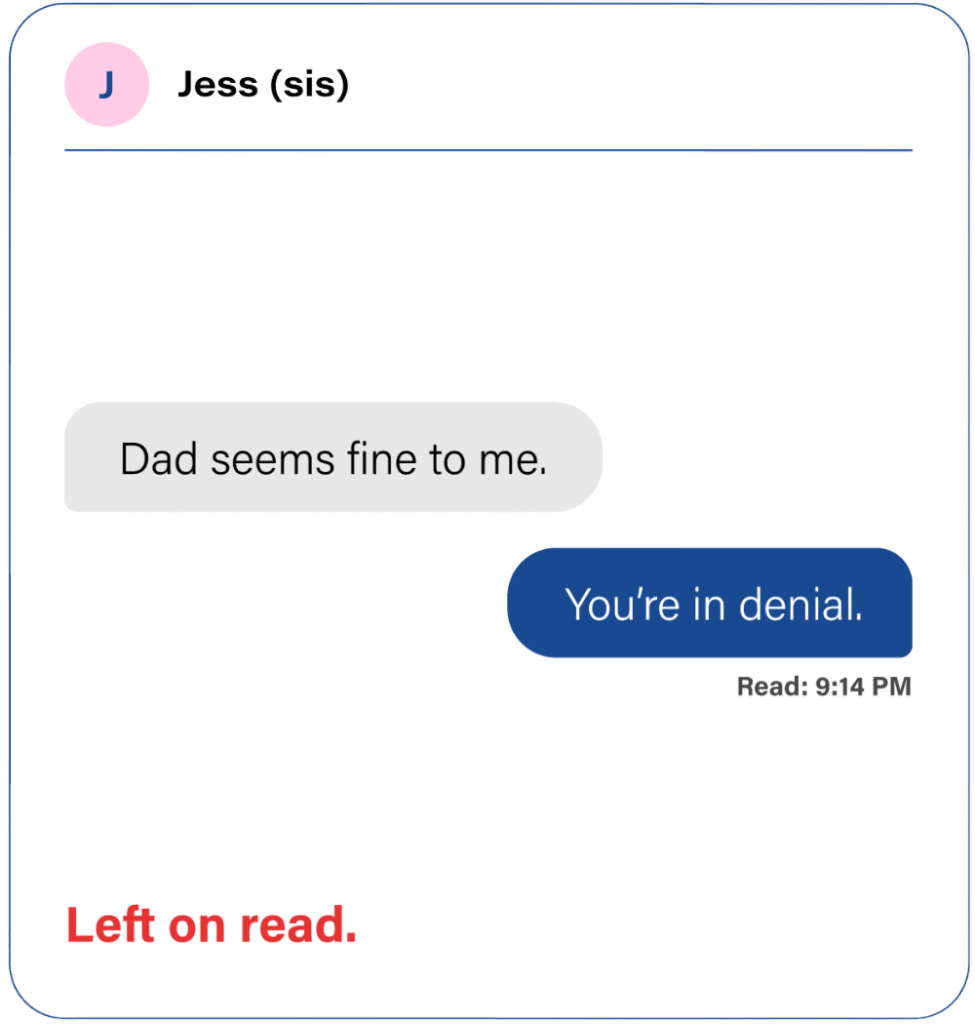
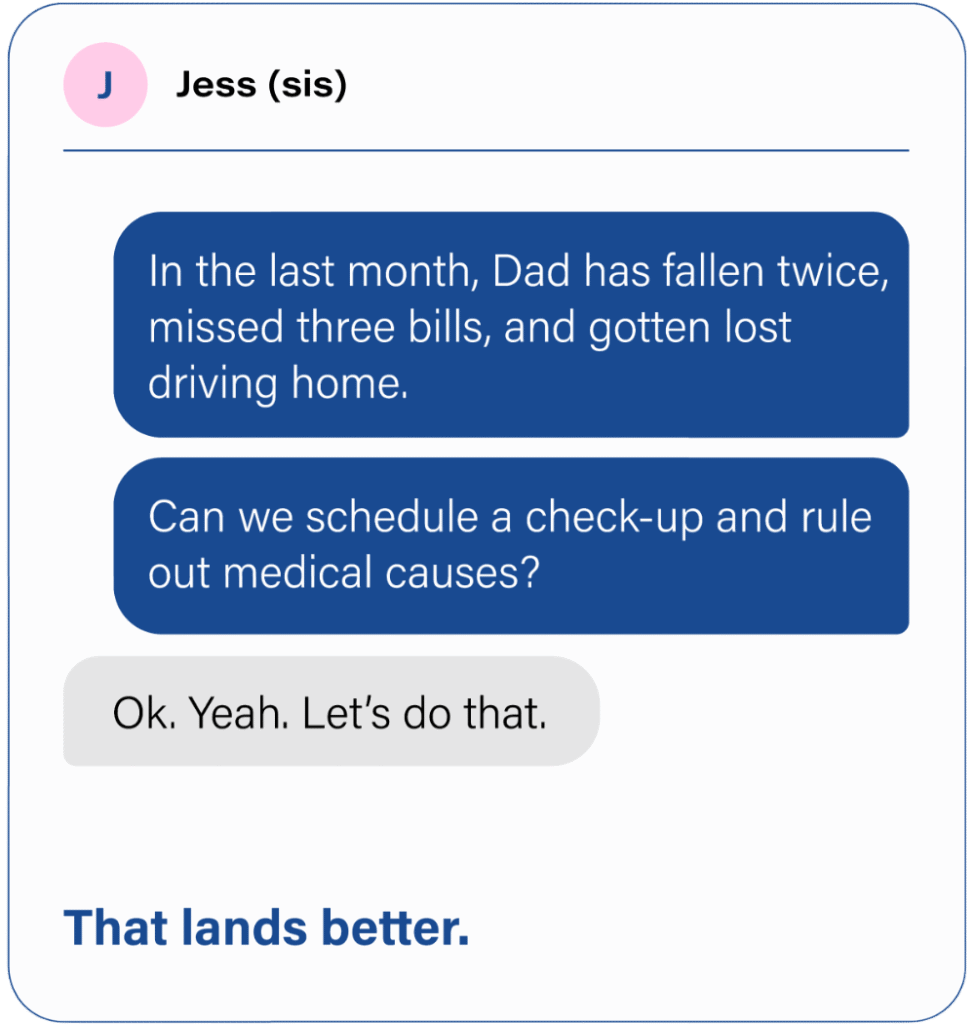
This is common. Really common. One sibling sees the daily changes. Another sees the polished, two-hour-visit version on a good day.
Instead of arguing about whether something is “seriously wrong,” stick to specifics.
“But What’s the Point of a Diagnosis?”
You may hear or think:
“If it’s dementia, there’s nothing anyone can do anyway.”
Not true. Not every cognitive change is dementia. Some causes are treatable. Others can be slowed.
And if it is dementia, an early diagnosis can help your family access support, plan ahead, and include your loved one in important decisions while they still can.
A diagnosis won’t fix everything. But it can give you something incredibly valuable: Clarity, options, and time.
Want the doctor to be able to talk to you, too?
Ask the office for its HIPAA authorization form (sometimes called a “release of information” form). Your loved one names you on it and signs it, and the office keeps it on file. Many patient portals also offer “proxy access,” so you can log in on their behalf. Do it sooner rather than later, while your loved one can still sign.
If You’re Still Thinking, “But Am I Overreacting?”
If something feels different, don’t dismiss it just because someone else calls it “normal aging.” You know what’s normal for your loved one.
You don’t need to know what’s causing the change.
You just need to notice it, write it down, and bring it up.
Find this cheat sheet helpful and want to save it?