
The Caregiver’s Cheat Sheet to:
Having The Talk With Your Aging Parents
(while trying not to feel like you’re parenting your parents)
The Caregiver’s Cheat Sheet to:
There are some things about your parents you’d much rather learn over coffee than in an ER waiting room.
So find out now, before you actually need to.
1. “If living on your own got harder, what would you want to do?”
Would you want to stay in your own home as long as you could? Move in with family? Assisted living? Golden Girls situation?
Good to know: Care costs vary a lot by zip code. Look up prices near them and factor that into the plan.
2. “If driving got complicated, how are we handling it?”
Calm conversation?
Staged intervention?
Car mysteriously “in the shop” forever?
Good to know: A doctor can refer them for a driving evaluation, so the verdict isn’t coming from you.
3. “Who would you want helping you with personal care if you needed it?”
Would you want family helping with things like bathing, getting dressed, or using the bathroom—or would you rather have a professional caregiver?
Good to know: Help can be part-time. Aides can come just a few hours a week for things like bathing.
4. “What does the money side of all this look like?”
Do you have savings set aside? Long-term care insurance? What do you expect insurance or Medicare to cover? Are you assuming family will help pay?
Good to know: Medicare generally doesn’t pay for long-term care, like ongoing help with bathing and dressing. A lot of families find that out the hard way.
5. “If you couldn’t make your own healthcare decisions, who would you want making them for you?”
Have you put that in writing with a healthcare power of attorney or healthcare proxy? And does the person you picked know they’re the person?
Good to know: Without one, state law may decide who makes the call, and it might not be the person your parent would pick.
6. “If you were really sick, how would you want us to handle it?”
Would you want to try every possible treatment, including clinical trials? When would you rather just focus on comfort? Are there treatments you know you wouldn’t want?
Good to know: Put your wishes in an advance directive so nobody has to guess (or argue) later.
7. “Where do you keep all the important stuff?”
Do you have these? Where do you keep them?
Insurance information
Important financial information
Advance directive
Financial power of attorney
Medication list
Will
Healthcare power of attorney
And does someone besides you know how to find it? A document nobody can find in a crisis might as well not exist.
Good to know: Copies of healthcare documents usually work fine at the hospital. But courts typically need the original will, and banks may want the original financial POA (or a certified copy).
When They Try to Shut It Down
Sometimes the hardest part isn’t asking the question. It’s getting past the first response—especially if your parent has a comeback for everything. Here are a few ways to keep the convo going.
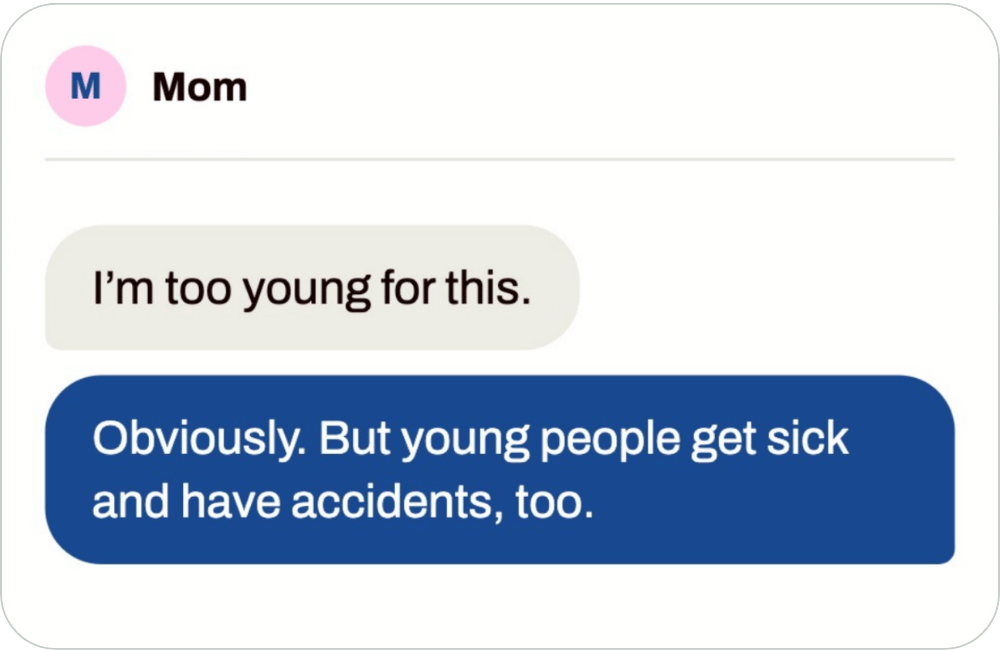
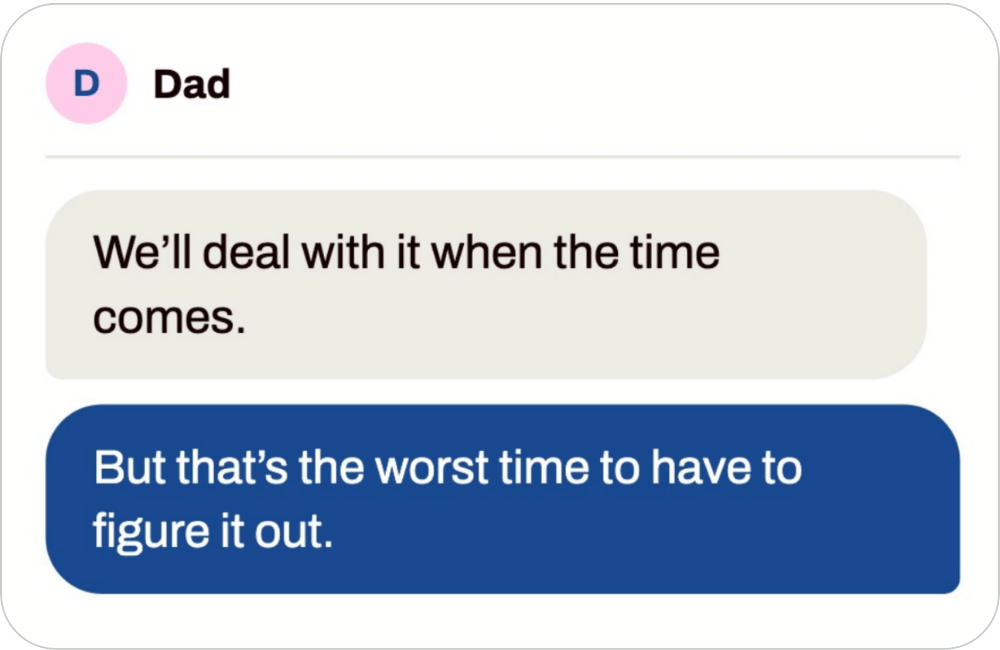
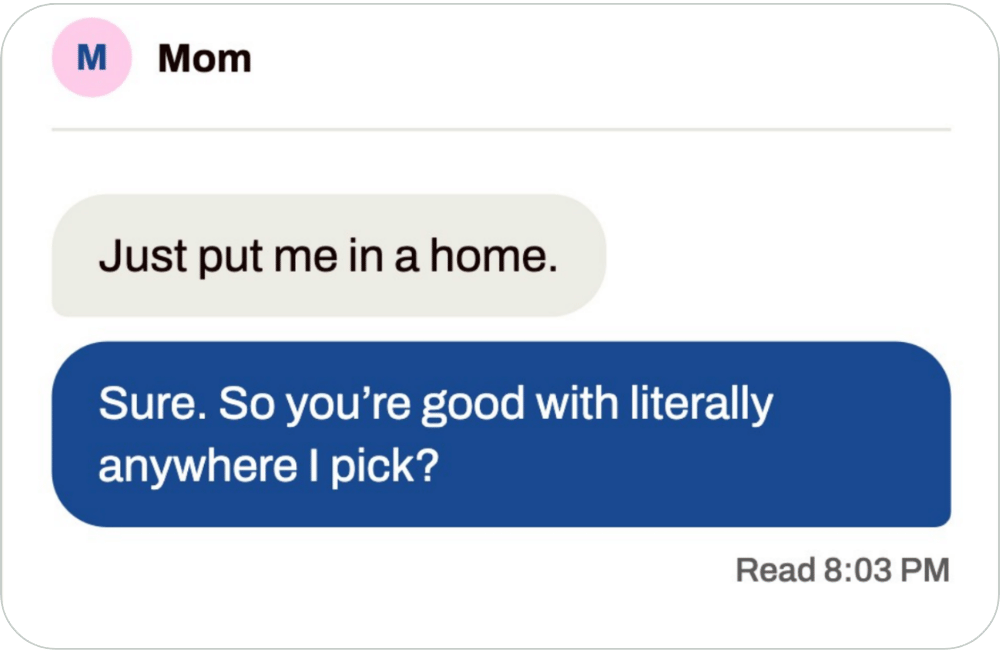

And don’t try to ask all the questions at once.
Pick one. Bring snacks. Car rides and walks work great, too. Less eye contact = less pressure.
There’s More to Talk About
This isn’t every question you’ll ever need to ask. But it’s a place to start.
For more conversation starters—for your parents, spouse, siblings, adult children, and even yourself—check out our free Care Convo Cards at WeCareOutLoud.org.
Find this cheat sheet helpful and want to save it?