The Caregiver’s Cheat Sheet to:
Actually Getting Your Child to Take Their Medicine
(For when you don’t have the energy for a 45-minute negotiation over 7.5 mL of liquid.)
The Caregiver’s Cheat Sheet to:
When your child needs medicine, “fine, forget it” isn’t really an option. If you’re the one responsible for getting a grossed-out, strong-willed kid to swallow medicine—sometimes multiple times a day—without making every dose a dreaded event, this one’s for you.
Here are a few things to try—because “just tell them they have to take it” doesn’t get you very far.
1. When the Medicine Tastes Gross, but They Have to Take It Anyway
Use the shot/chaser method.
If you danced to “Get Low,” “In Da Club” or “Hollaback Girl” in your 20s, you know it well. Follow their medication with apple juice, chocolate milk, whipped cream, soda— whatever your pharmacist says is okay with that medicine.
Pro tip
Let your child pick a strange or yucky “shot” for you to take (pickle juice, jalapeño brine, etc.) while they take their medicine, and chase it with them. And if you’re up for it, make it your thing: clink cups, count to three, bottoms up.
Mix it with something (with your care team’s okay).
Something with a strong, sweet taste like canned frosting, chocolate syrup or melted ice cream can help mask the taste.
Check with your pharmacist first
Can this specific medicine be mixed with food or drinks, crushed, or taken out of its capsule?
If mixing is okay, use a small amount your child can finish so they get the full dose.
Pro tip
Make sure your child knows you’re doing this—don’t mix the med into their food in an attempt to hide it from them. The goal is to make taking the med a less yucky experience, not make them suspicious any time you hand them a milkshake.
2. When It’s a Pill and Swallowing It Is a Struggle
Practice with smaller, less scary things.
Ask your care team whether candy practice is appropriate for your child. Start with sprinkles, then try Nerds candies, Mini M&Ms and regular M&Ms, gradually working up to the size of their medication as they’re ready.

You’re essentially creating a pill-swallowing training program using the contents of a convenience store.
Pro tip
Celebrate every attempt. Pill swallowing gets harder when everyone is staring, waiting and saying, “Just swallow it.” Make even the tiniest tries feel like a win.
3. When It’s Not Really About the Taste
Sure, the medicine tastes gross. But sometimes your child’s resistance is about trying to take back some control when so many decisions are being made for them. Pain, nausea or trouble swallowing can play a part, too—tell the care team if any of those might be getting in the way.
Let them pick the order.
If the care team says the order is flexible, let your child choose which med goes first. You know they all end up in the same place. Your child does not need to know this is mostly an illusion of control.
Hand over the remote/phone.
Medicine time can also mean their choice of show, video, song or silly YouTube clip. If you have to listen to the same 43-second video six times a day, so be it.
Change the delivery system.
A ridiculous cup for their chaser. A special medicine cup. A silly name for the oral syringe. Something that makes this feel 5% less medical. Keep using the dosing device your pharmacist recommends to measure liquid meds.
Let them make some noise. Roar. Yell. Make the world’s most dramatic gagging noise—before or after swallowing (but not with medicine in their mouth). And yes, depending on your household, maybe even deploy a swear word. Being sick or needing medicine every day comes with very few perks. Getting to yell
“THIS TASTES LIKE HORSE SH*T”
may be one of them.
And When None of This Works…
You can do everything “right” and still end up sitting on the kitchen floor at 9:17 p.m. with a syringe of medicine, an increasingly furious child, and no idea how this became your life.
If taking medicine is becoming consistently stressful, tell your child’s care team. They may be able to suggest a different formulation, flavor, technique or other option. A child life specialist may be able to help, too.
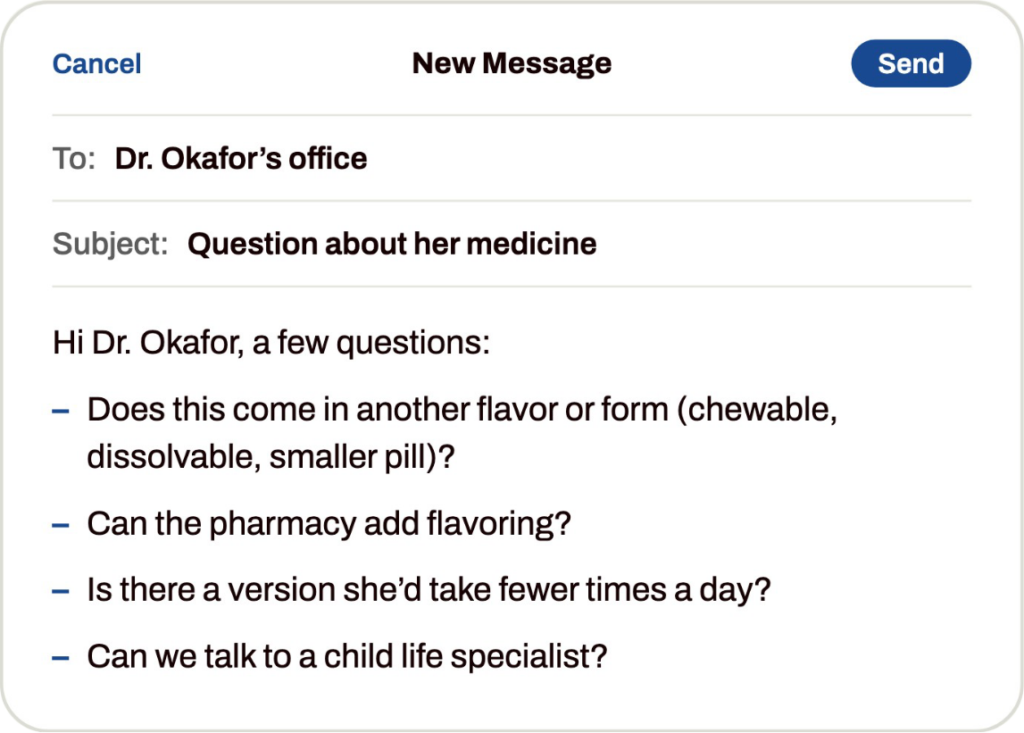
If your child refuses or misses a dose, spits it out or vomits afterward, contact the care team for instructions rather than guessing how much to give again.
Because you do not get extra caregiver points for figuring out every single thing yourself.
Find this cheat sheet helpful and want to save it?